
Marketing technology can make entrepreneurship easier, but only when the tools serve the strategy instead of becoming the strategy. Small-business owners now have access to design platforms, artificial intelligence, video communication, livestreaming, research assistants, music-generation tools, presentation software, and website technology that once required specialized teams. The challenge is no longer finding technology; it’s deciding which tools actually solve a business problem.
That is the focus of Best Marketing Tools for Small Businesses in 2026: How to Elevate Your Marketing Without Breaking the Bank. This is Part 2 of our marketing-tools conversation, and the goal isn’t to convince you to buy seven more subscriptions. The goal is to help you build a marketing system that allows you to communicate more clearly, create more consistently, understand your audience, and protect your most limited resource: time. That distinction matters because digital marketing capabilities are increasingly tied to small-business performance when technology aligns with customer knowledge and organizational capabilities.
The Best Tool Is the One That Solves a Problem
Before discussing Canva, Loom, Riverside, Restream, NotebookLM, SUNO, Beautiful.ai, or your website, keep this principle in mind: don’t collect tools; build capabilities.
Marketing involves creating value for customers and developing profitable customer relationships (Armstrong et al., 2026). Therefore, technology should help your business accomplish one or both of those objectives. A systematic review of emerging technologies and SME marketing similarly found that digital technologies can enhance competitiveness and growth. Still, effective adoption requires businesses to connect technology with marketing strategy rather than treating digitalization as an end in itself.
That shifts the question from “What is the hottest marketing tool?” to “What problem does my business need technology to solve?”
Best Marketing Tools for Small Businesses in 2026: How to Elevate Your Marketing Without Breaking the Bank starts there because entrepreneurs with limited resources cannot afford technology just because everyone else is talking about it.
Proverbs 21:5 teaches that diligent planning leads toward abundance. The principle is straightforward: plan before you spend.
Canva: Turn Your Message Into a Visual Brand
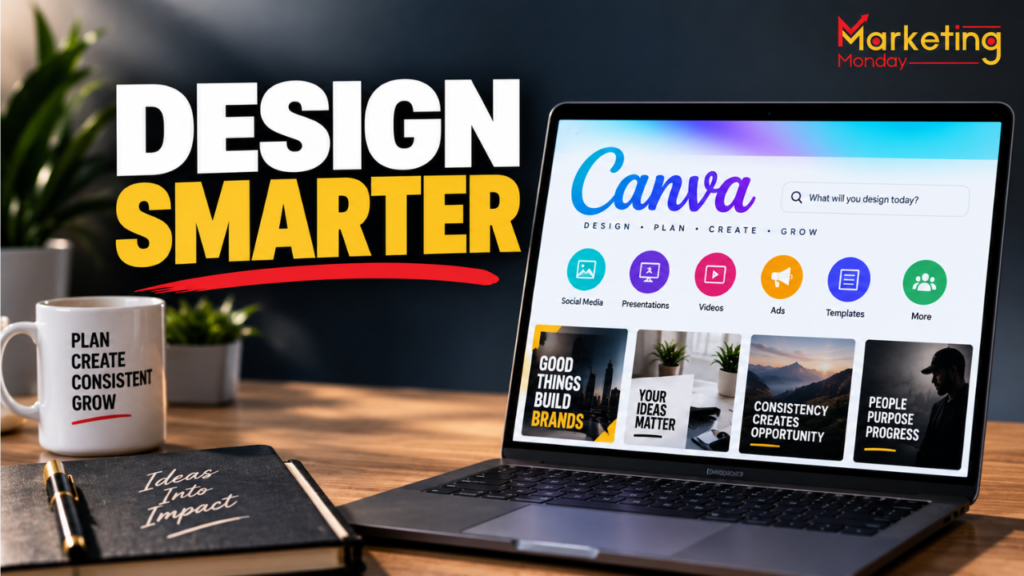
Your customer often sees your marketing before hearing your explanation. That makes visual consistency more than decoration; it becomes part of communication.
Canva helps entrepreneurs create repeatable templates for social media graphics, presentations, thumbnails, advertisements, lead magnets, and other marketing assets. Instead of redesigning everything from scratch, create a small visual system: approved colors, fonts, logo placement, templates, and image styles.
This connects to a broader management principle. Effective management involves coordinating resources toward organizational objectives (Schermerhorn, 2011). A design platform becomes valuable when it reduces unnecessary work while improving consistency. The practical lesson is simple: create once, systematize, and repeat.
Loom: Stop Repeating Yourself

How many times have you explained the same process? How to onboard a customer, update a document, complete a form, or how your team should post content. That repetition suggests you need a system.
Loom-style asynchronous video communication lets entrepreneurs record a process once and reuse the explanation. This can support training, onboarding, customer service, delegation, and standard operating procedures.
Organizational behavior research emphasizes that communication, role clarity, and coordination affect how people function within organizations (Ivancevich & Konopaske, 2023). Your business may be small, but unclear processes still create friction. Before scheduling another meeting, ask: Could I record this once?
Riverside, Restream, and Ecamm: Build Content Infrastructure
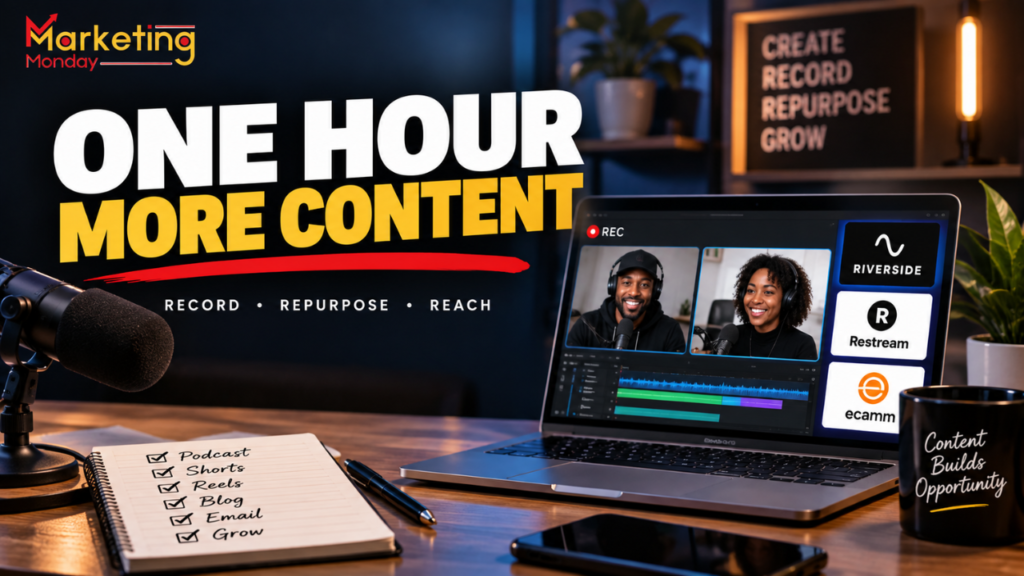
Content marketing is easier when you stop treating every video as an isolated production. Podcast interviews can become full episodes, Shorts, Reels, quote graphics, blog posts, email content, and educational clips. Livestreaming and recording platforms can therefore become part of a larger content system.
This is where Best Marketing Tools for Small Businesses in 2026: How to Elevate Your Marketing Without Breaking the Bank becomes less about software and more about leverage. One hour of intentional recording can fuel multiple pieces of content.
The principle also reflects stewardship; Luke 14:28 teaches the importance of calculating the cost before building. Entrepreneurs should apply that wisdom to content production. Before buying cameras, microphones, subscriptions, and software, determine what content you actually intend to produce and where your audience consumes it.
NotebookLM and AI: Research Faster, Think Deeper
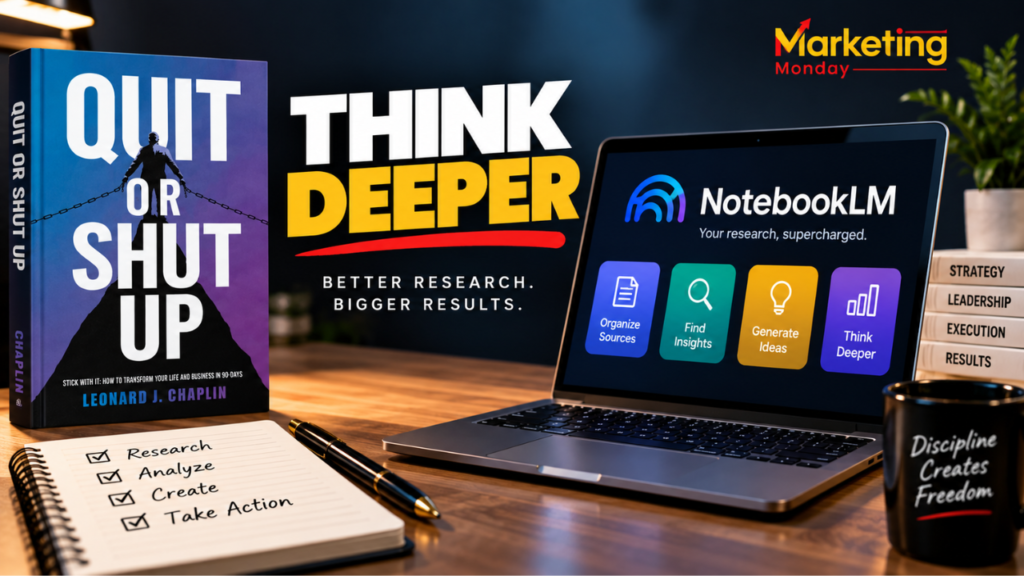
Artificial intelligence represents one of the most significant changes in modern marketing practice. Research suggests generative AI will increasingly influence customer communication, content creation, product development, and other marketing functions, but scholars also warn about hallucinations, bias, privacy, copyright, and the continuing need for human oversight.
That last part matters; AI should not replace your judgment. Use tools such as NotebookLM to organize source material, identify themes, compare documents, generate questions, and accelerate research. Then verify the evidence yourself.
This reflects sound research practice. Researchers must carefully design inquiry, evaluate evidence, and interpret findings rather than simply accepting information at face value (Cozby & Bates, 2024; Creswell, 2018). Qualitative analysis similarly requires researchers to recognize patterns systematically rather than making conclusions from isolated observations (Miles et al., 2019; Saldaña, 2021).
The same discipline should govern AI-assisted marketing. A 2026 systematic review of 381 peer-reviewed articles identified AI-driven personalization, predictive analytics, generative content creation, ethics and privacy, and AI deployment in B2B and SME contexts as major themes shaping contemporary AI marketing research. AI can accelerate your work; it should not eliminate your responsibility to think.
SUNO: Make Your Brand Sound Like Something

Brand identity is not exclusively visual. Your audience can recognize a sound, phrase, intro, rhythm, or musical identity just as they recognize a logo. AI music-generation platforms such as SUNO give smaller creators another way to experiment with sonic branding without beginning with a traditional production studio.
However, the strategic question remains: Does the sound strengthen the brand?
Technology without brand clarity creates confusion faster.
For The Pulse of Marketing, for example, the objective isn’t just to have intro music. The sound should reinforce the brand’s personality and experience; that is the difference between using technology and strategically integrating it.
Beautiful.ai, or the Tools You Already Own
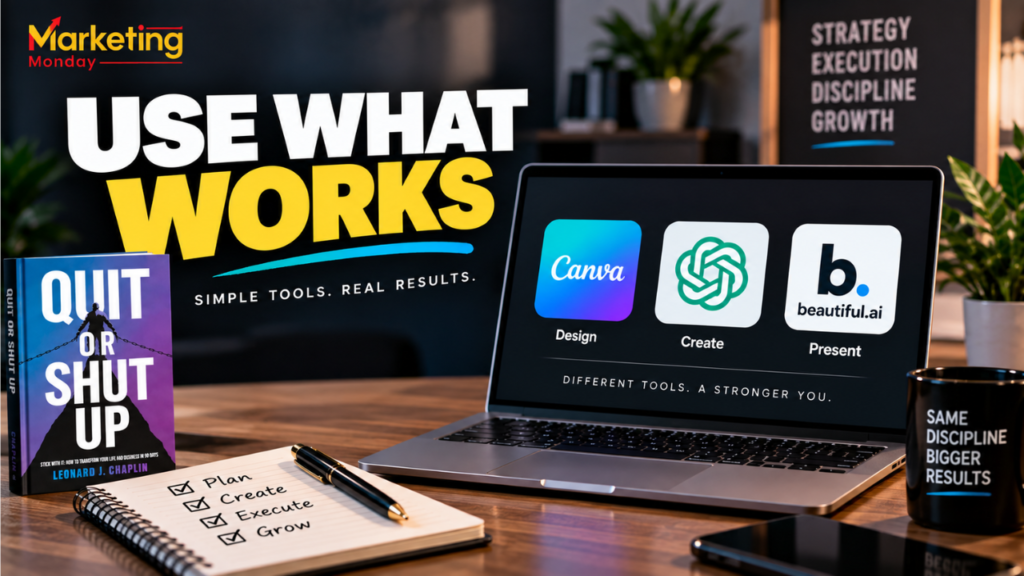
Here is where my own experience taught me something important: I explored Beautiful.ai to improve presentation creation. It is a useful option, but my existing combination of Canva and ChatGPT already supported much of my workflow.
That realization saved me from adding another subscription just because another tool existed; you don’t need every tool. Recent research on AI adoption reinforces this concern. A systematic review of 78 peer-reviewed studies found that technology readiness, skills, financial readiness, organizational support, market pressure, and regulatory considerations all influence how firms adopt AI.
That means the smartest technology stack is not necessarily the biggest one. It is the one your business can afford, understand, integrate, and consistently use. That principle also connects with Quit or Shut Up. Transformation doesn’t happen because you keep discovering something new; it happens when you consistently execute what moves you toward the goal (Chaplin, 2026). Sometimes another tool is progress; sometimes it’s procrastination wearing a business suit.
Your Website: Build Something You Own
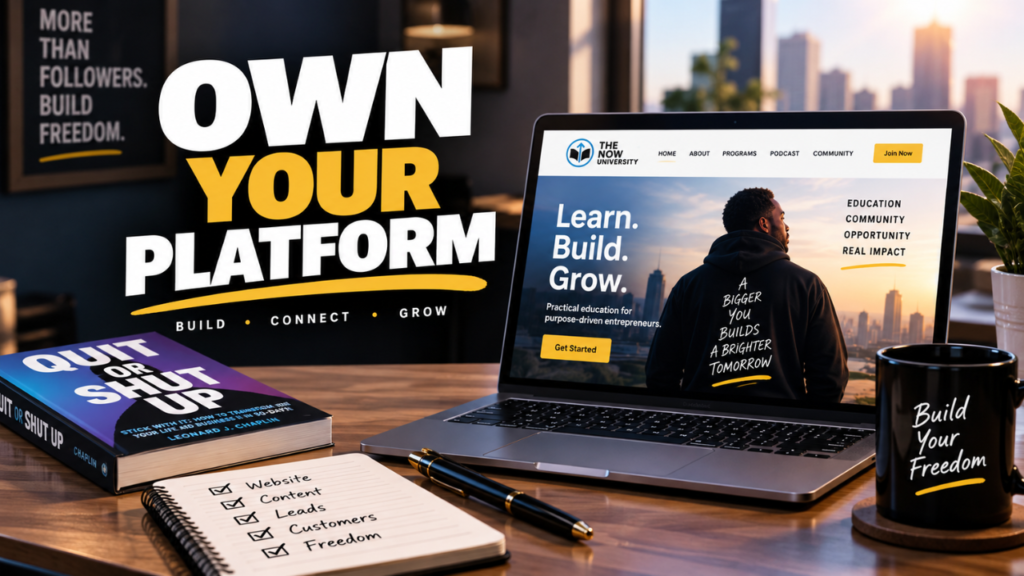
Social platforms are powerful distribution channels, but your website remains an important piece of owned business infrastructure. Think about the difference: Social media says, “Follow me.” Your website should say, “Here is how I can help you.”
A strong small-business website should clearly communicate whom you serve, what problem you solve, what you offer, why someone should trust you, and what they should do next. It can also house long-form content, lead-generation resources, products, services, podcast episodes, email sign-up opportunities, and customer education.
Research continues to associate digital marketing capabilities with business performance. A recent quantitative study of 224 SME managers and directors found that digital marketing capabilities contributed to SME performance beyond CRM capabilities alone. Another large-scale study found positive relationships between digital marketing and SME sales and productivity. Technology matters, but capability matters more.
Build Your Marketing Stack Around Your Customer
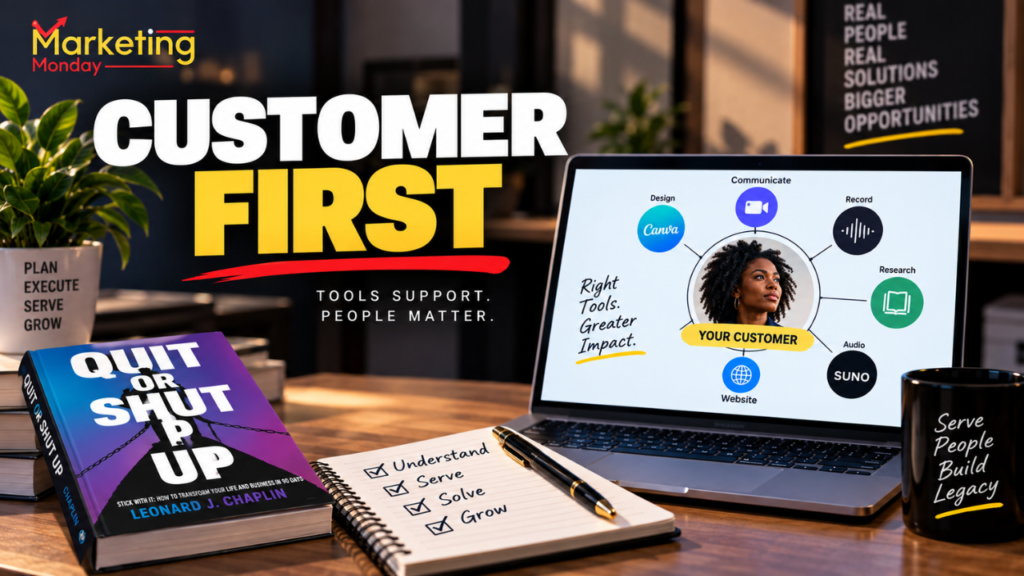
Here is the practical takeaway from Best Marketing Tools for Small Businesses in 2026: How to Elevate Your Marketing Without Breaking the Bank: Do not ask, “How many marketing tools can I use?” Ask: What does my customer need, where is my marketing getting stuck, and what is the simplest tool that can remove that friction?
You may need Canva for design, Loom for communication, Riverside for recording, NotebookLM for research, SUNO for audio branding, and a strong website for conversion, or you may need only three. That is okay.
Leadership involves influencing people toward meaningful objectives (Yukl, 2020), and wise management requires effectively coordinating available resources (Schermerhorn, 2011). Your marketing technology should therefore increase your capacity to serve, not increase your anxiety.
Colossians 3:23 reminds believers to work wholeheartedly. Excellence doesn’t require having everything; it means stewarding what you have well.
You Are the Builder! The Now University Is the Guide

If you are reading this and thinking, “Coach LJ, I have the tools, ideas, and vision, but I still need help putting everything together,” that is exactly where the next stage begins. You are the hero of this story; you have the vision, you know the people you want to serve, and you are building the business. But heroes still need a map.
The Now University is designed to guide entrepreneurs who are tired of guessing and ready to build with more structure, strategy, accountability, and execution. The goal isn’t to make you dependent on another program; it is to help you become the leader your business needs.
Best Marketing Tools for Small Businesses in 2026: How to Elevate Your Marketing Without Breaking the Bank. Ultimately, it is not about Canva, AI, livestreaming, or another subscription. It is about you learning how to use the right resources to serve people better and build something sustainable.
You already have access to more technology than entrepreneurs from previous generations could have imagined. Now the question is: What will you build with it?
References
Armstrong, G., Kotler, P., & Balasubramanian, S. (2026). Marketing: An introduction (16th ed.). Pearson.
Chaplin, L. J. (2026). Quit or shut up: Stick with it! How to transform your life or business in 90 days. Hemingway Publishing.
Cozby, P. C., & Bates, S. (2024). Methods in behavioral research (15th ed.). McGraw-Hill.
Creswell, J. W. (2018). Research design: Qualitative, quantitative, and mixed methods approaches. SAGE Publications.
Ivancevich, J. M., & Konopaske, R. (2023). Organizational behavior (12th ed.). McGraw-Hill.
Miles, M. B., Huberman, A. M., & Saldaña, J. (2019). Qualitative data analysis: A methods sourcebook (4th ed.). SAGE Publications.
Saldaña, J. (2021). The coding manual for qualitative researchers (4th ed.). SAGE Publications.
Schermerhorn, J. R., Jr. (2011). Management (11th ed.). John Wiley & Sons.
Yukl, G. (2020). Leadership in organizations (9th ed.). Pearson.